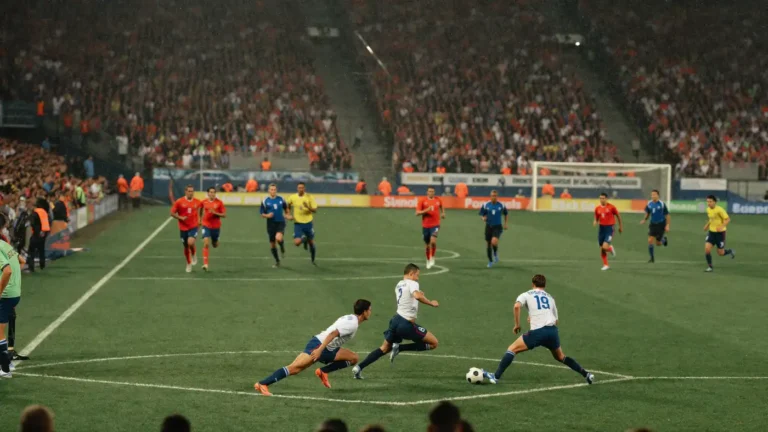
Roughly a third of World Cup goals now arrive from dead-ball situations — and in knockout football, where open play gets strangled by fear, that share only grows. The case for set pieces as the tournament’s most efficient weapon, in one table.
The matchup: open play vs the rehearsed goal
| Open play | Set pieces | |
|---|---|---|
| Share of recent World Cup goals | Roughly two-thirds | Roughly one-third (incl. penalties) |
| What it requires | Sustained creation vs packed blocks | Rehearsal, delivery, timing |
| Transfers to knockout games? | Suppressed by defensive stakes | Holds — corners keep coming |
| Training cost | Years of shared patterns | Weeks of choreography |
| Variance | High — depends on form | Lower — repeatable routines |
Why tournaments amplify the dead ball
A World Cup is not a league. Teams assembled in three-week camps cannot build the automatisms of club sides, so open-play creation runs below club baselines while compact defending runs above them. Set pieces invert that equation: a corner routine is choreography, and choreography is exactly what a short camp can install. England’s 2018 run — nine set-piece goals, a tournament record — was the proof of concept that turned every federation’s attention to the training ground.
The numbers travel across editions. At recent World Cups the set-piece share of goals, penalties included, has hovered around one in three, and it spikes in the knockout rounds as open-play shot volume drops. When legs tire in extra time, the corner count keeps climbing — and so does the value of one good delivery.
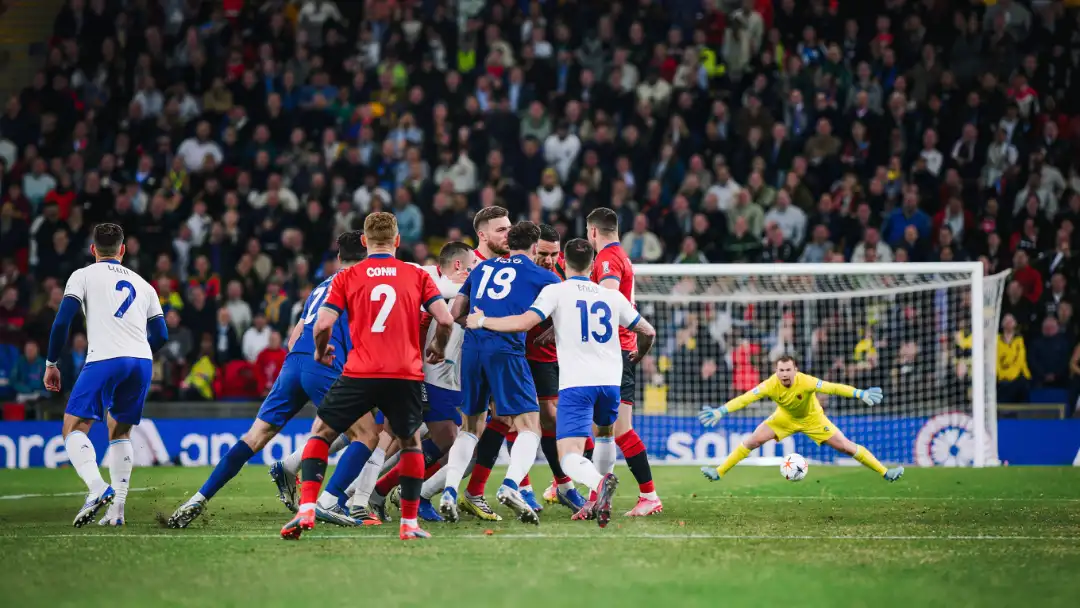
Verdict
Set pieces are the highest-leverage investment a World Cup squad can make. They are cheap to train, resistant to tournament pressure, and they convert fouls and corners — events a team can manufacture — into expected goals. Analysts at Opta’s The Analyst have tracked the rising specialist economy around them, from throw-in coaches to delivery menus. The teams that lift trophies in July tend to be the ones that treated the dead ball as a science in June: expected goals (xG) do not care whether the buildup was beautiful.