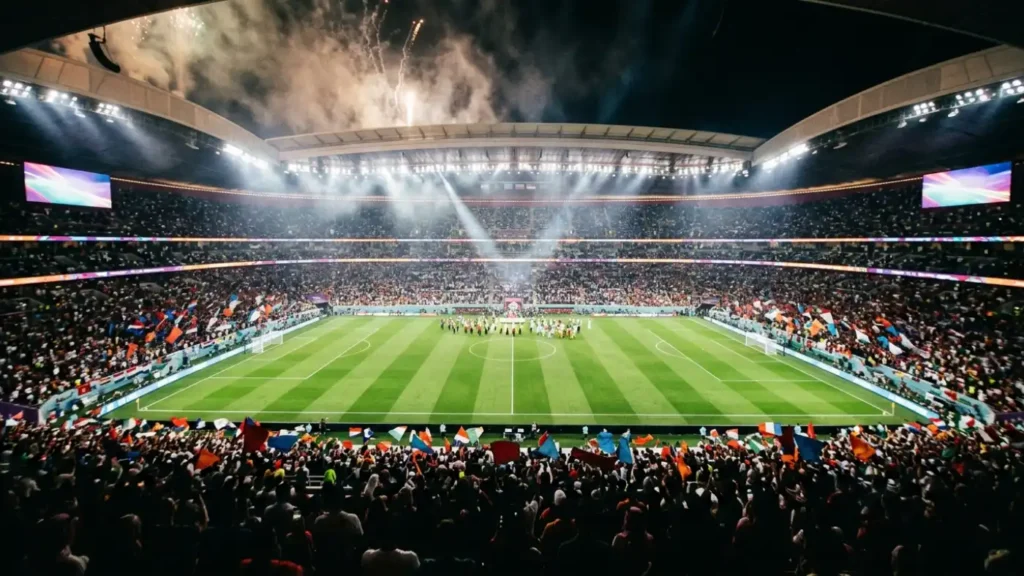
The 2026 FIFA World Cup is here: 48 teams, 16 stadiums across three countries and 104 matches between June 11 and July 19. This page is your living map to the biggest tournament ever staged — the format, every group, the key dates, the venues and exactly how to watch from the United States.
The tournament at a glance
For the first time, the World Cup belongs to an entire continent. The United States hosts 78 matches, with Mexico and Canada staging 13 each — and the math of the expanded field changes how every contender plans its summer.
Thirty-nine days separate the opening whistle at Estadio Azteca from the final in East Rutherford, New Jersey. In between: more matches than the last two World Cups combined played in a single edition, spread across 11 American, 3 Mexican and 2 Canadian venues.
How the new 48-team format works

The expansion from 32 to 48 teams brings a structure the World Cup has never used. Teams are drawn into 12 groups of four, and each side plays three group games.
- The top two in each group advance — 24 teams.
- The eight best third-placed teams join them, completing a brand-new round of 32.
- From there it is straight knockout soccer: round of 16, quarterfinals, semifinals and the final on July 19.
The practical effect: a single bad afternoon no longer buries a contender, but it sharpens the value of goal difference. Third place with a respectable record now carries real currency — and group-stage rotation becomes a genuine strategic decision for the favorites.
All 12 groups
The draw, held in Washington, D.C. in December 2025, produced these twelve groups:
| Group | Teams |
|---|---|
| A | Mexico · South Africa · South Korea · Czechia |
| B | Canada · Switzerland · Qatar · Bosnia and Herzegovina |
| C | Brazil · Morocco · Haiti · Scotland |
| D | United States · Paraguay · Australia · Türkiye |
| E | Germany · Curaçao · Côte d’Ivoire · Ecuador |
| F | Netherlands · Japan · Tunisia · Sweden |
| G | Belgium · Egypt · Iran · New Zealand |
| H | Spain · Cabo Verde · Saudi Arabia · Uruguay |
| I | France · Senegal · Norway · Iraq |
| J | Argentina · Algeria · Austria · Jordan |
| K | Portugal · Uzbekistan · Colombia · DR Congo |
| L | England · Croatia · Ghana · Panama |
Each group hub on Sports SA will track standings, scenarios and tiebreakers as the matches come in.
Key dates
Mexico City’s Estadio Azteca — the first stadium ever to open three World Cups — raises the curtain, and the group stage runs through June 27 with up to four kickoffs a day. The complete day-by-day fixture list lives on the official FIFA match schedule.
The 16 stadiums
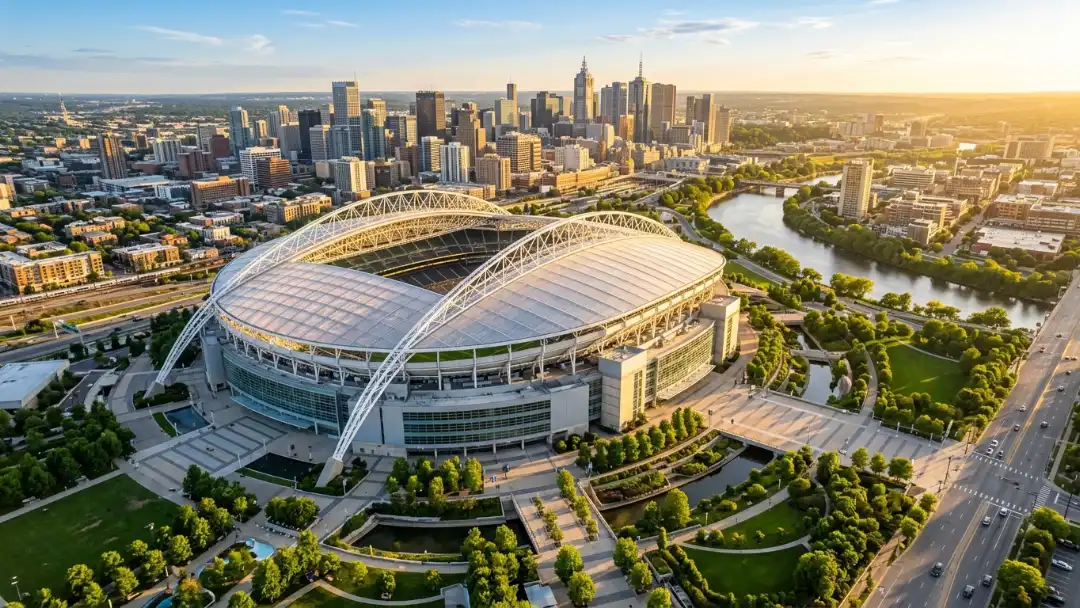
The United States supplies the tournament’s spine: East Rutherford (the final), Los Angeles, Dallas, Houston, Atlanta, Miami, Philadelphia, Kansas City, Seattle, San Francisco Bay Area and Boston. Mexico adds Mexico City, Guadalajara and Monterrey; Canada brings Toronto and Vancouver.
Altitude in Mexico City, summer heat in Texas, and roofed stadiums in Dallas, Houston, Atlanta and Vancouver all feed directly into how teams will manage squads — a full venue-by-venue breakdown is coming to this hub soon.
How to watch in the USA

English-language rights belong to FOX: all 104 matches air live across FOX (70 matches) and FS1 (34), with about 40 in primetime. In Spanish, Telemundo and Universo carry the tournament on TV while Peacock streams all 104 matches. The opening match also streams free on Tubi. Full channel maps and kickoff windows sit with FOX Sports.
The USMNT’s path
The hosts landed in Group D with Paraguay, Australia and Türkiye — and a schedule built for a home-soil run:
- June 12 — USA vs Paraguay, Los Angeles
- June 19 — USA vs Australia, Seattle
- June 25 — USA vs Türkiye, Los Angeles
Win the group and the route opens through a July 1 round-of-32 date in the Bay Area. Roster news and camp updates flow through U.S. Soccer, and our USMNT coverage will track every selection call from now to kickoff.
Storylines to follow
Argentina arrives as defending champion chasing back-to-back titles. Brazil hunts a record-extending sixth star. Three host nations carry home expectations on three very different scales — and somewhere in the field, the expanded format guarantees a debutant nobody is planning for will crash a knockout bracket.
Sports SA will keep this hub current through the final on July 19. Bookmark it; the map only gets more interesting from here.
From the archive: World Cup history
The 2026 tournament arrives with 92 years of history behind it. Start with the full statistical record of every champion, then revisit all 22 finals — and the rest of our history desk: the complete shootout record, the greatest upsets ranked, the three North American World Cups and how the field grew from 13 to 48.
Team guides: the contenders, one by one
Our team-by-team World Cup guides cover fixtures in ET, full squads, tactical profiles and official broadcast info: Brazil, Argentina, France, Germany, Spain, England, Portugal, Uruguay, USA and Mexico.