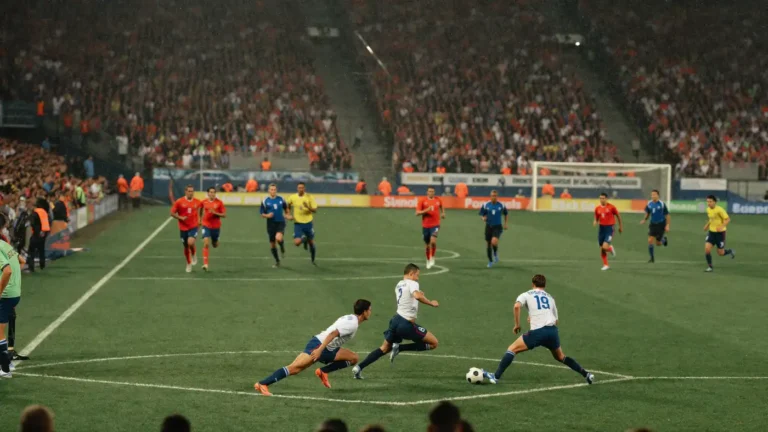
A record 48 teams are at the 2026 World Cup, and every one of them — except the three hosts — survived a qualifying gauntlet that ran for nearly three years across six confederations. Here is how the road was actually built, date by date.
How the 48 slots were divided
The expansion rewrote the map: UEFA 16 slots, Africa 9, Asia 8, South America 6, CONCACAF 6 (three of them the automatic host berths), Oceania 1 guaranteed for the first time, and the final 2 places decided by an inter-confederation playoff tournament. For Africa and Asia it was the largest contingent in history; for South America, six of ten members qualifying turned the famous marathon into a more forgiving race.
The timeline that decided everything
2023 — Qualifying opens with Asia’s first rounds, the longest road of any confederation.
2024 — Continental group stages run through FIFA windows on every continent, with the CONMEBOL marathon and Europe’s Nations League feeding seedings.
2025 — Direct slots lock in: Africa’s nine group winners, Asia’s eight, Europe’s group winners and the CONCACAF three. First-time qualifiers Cape Verde, Jordan and Uzbekistan punch tickets, soon joined by Curaçao — the smallest nation ever to reach a World Cup.
December 5, 2025 — The final draw in Washington, D.C. sorts the 48 into twelve groups of four.
March 2026 — The last drama: European playoffs and the six-team inter-confederation tournament fill the final berths. Italy, four-time champion, loses its playoff to Bosnia and Herzegovina on penalties on March 31 — and misses a third straight World Cup.

What the new math changed
The expanded field cut the brutality of the old format — Europe’s failure rate fell, Africa doubled its presence, and four debutants made it through. Critics argued the regular season of qualifying lost tension; the counterargument is March 2026 itself, when a former world champion went out on penalties. The booking profiles and suspension management that once decided tight two-leg playoffs now matters across a longer, flatter pyramid.
The full qualified field, group by group, lives on FIFA’s official tournament hub. The short version: the road to 48 was designed to open the World Cup to the world — and on that score, the data says it worked.