EPA per play — Expected Points Added — is the closest thing modern football has to a universal currency. It prices every snap by how much it changes a team’s expected score, and it now drives everything from fourth-down decisions to quarterback contracts. Six questions, answered.
What is “expected points” in the first place?
Every field position, down and distance carries a historical scoring expectation. First-and-10 at your own 25 is worth a bit under a point of expected score; first-and-goal at the 2 is worth nearly six. Decades of play-by-play data set those values.
So what does EPA measure?
The change in that expectation caused by one play. A 20-yard completion on 3rd-and-8 might add two full expected points; a sack that knocks a team out of field-goal range subtracts them. Stack every snap and divide by plays, and you get EPA per play — offensive efficiency with the situation priced in.
What counts as a good number?
League-best offenses typically live around +0.15 EPA per play across a season; anything positive is above water, and sustained marks below -0.10 usually get coordinators fired. Defensive EPA mirrors it: negative is good, because the defense is subtracting expected points.
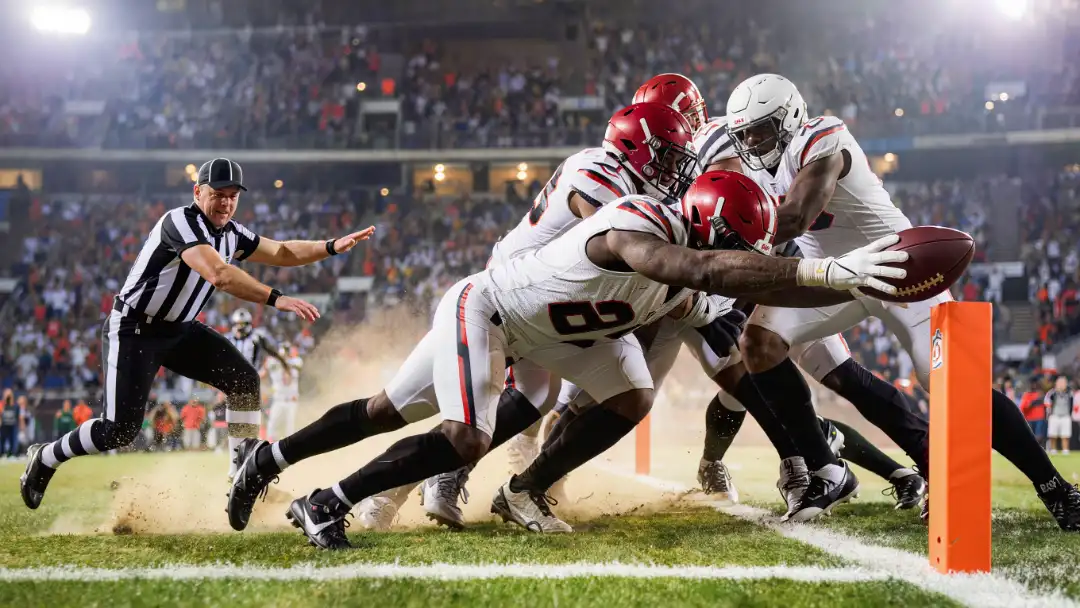
Why per play instead of per game?
Volume lies. A team that runs 75 snaps can out-gain a team that runs 55 while being far less efficient. Per-play normalization strips out pace, garbage time inflates and the transition tactics of teams playing from behind — it compares offenses on the quality of each decision, not the quantity.
How did EPA change actual football?
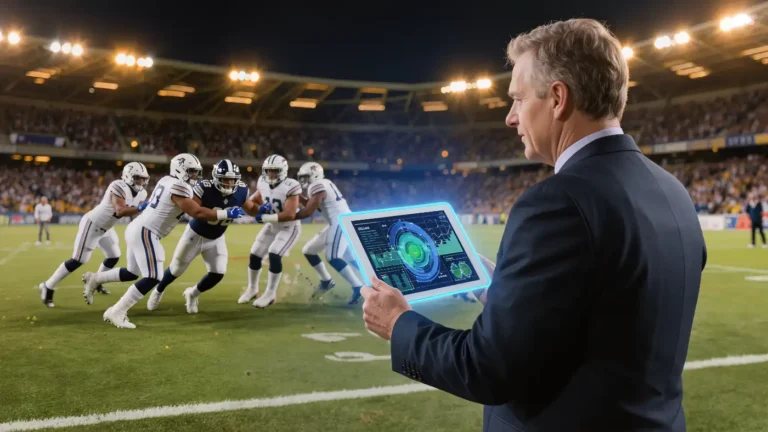
Fourth-down aggressiveness is the visible revolution: the math showed that going for it in short yardage adds expected points compared with punting in most of the modern map, and coaching behavior followed. The same framework reshaped play-calling — early-down passing grades far better by EPA than the old run-first orthodoxy — and it underpins the win-probability models broadcast on every primetime game, including the league’s own tracking platform at NFL Next Gen Stats.
Where does it break?
EPA credits the whole offense for one player’s brilliance, punishes quarterbacks for dropped passes, and gets noisy in small samples — a two-game EPA is a coin flip, a ten-game EPA is a verdict. That is why analysts pair it with DVOA, which adjusts for opponent strength. Read together, the two stats agree on the truth more often than either agrees with the standings.