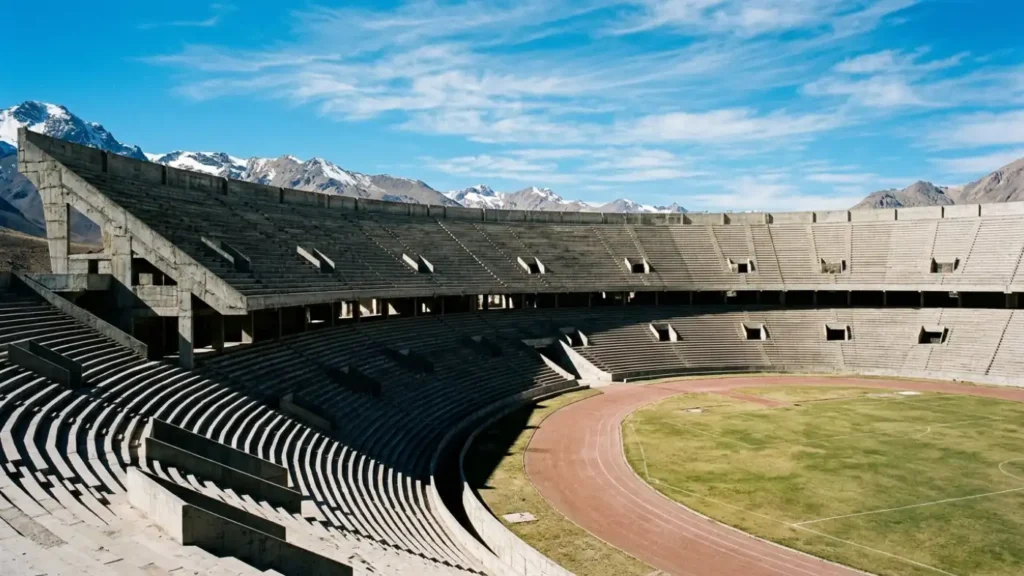
When Mexico and South Africa kicked off on June 11, Estadio Azteca did something no stadium had ever done: open a third World Cup. Sixty years of concrete, altitude and history led to that whistle.
Six decades in five dates
- 1966 — The bowl opens in southern Mexico City: 100,000-plus capacity, steep double tiers, built to intimidate at 7,300 feet.
- 1970 — Azteca hosts its first World Cup, opening match and final included. Brazil dismantle Italy 4-1 in what many still call the most complete final ever played; Pelé wins his third title.
- 1986 — The tournament returns on short notice, and the stadium answers with the most famous single match in World Cup history: Maradona’s Hand of God and the Goal of the Century against England, four days before he lifts the trophy on the same pitch.
- 2017-2024 — Renovations trim capacity to roughly 83,000 while modernizing the bones of a building that never stopped hosting El Tri.
- 2026 — A third opening match, a record no other venue on earth holds.
Why this stadium keeps being chosen
Part of it is arithmetic — Mexico City is the largest metropolis in North America and El Tri fill the bowl for friendlies. But the deeper reason is mythology: Azteca is the only ground where two different players sealed legend-defining titles, and FIFA understands the value of a stage that arrives pre-loaded with history. The official tournament record of both finals sits in FIFA’s archives.
The 2026 chapter
This time the script is different: Azteca opens but does not close — the final belongs to New Jersey. Mexico’s task is to write a home story deep into the knockout bracket, starting with the Group A campaign on this very pitch. The altitude, as always, plays for the home side.