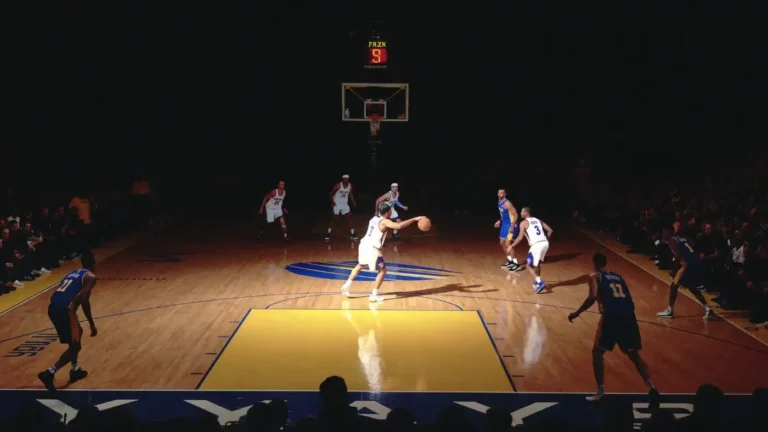
“Pace and space” is the NBA’s operating system: play faster, spread wider, and let three-point math do the heavy lifting. Here is how the machine works — and how to spot it live.
The arithmetic that started it
A 35% three-point shooter generates 1.05 points per attempt; a 50% two-point shooter generates 1.00. Once front offices internalized that single comparison, the league’s shot map redrew itself — rim attempts and threes up, the mid-range reserved for specialists who earn it.
Spacing is gravity
A shooter who must be guarded 25 feet from the basket drags his defender out of the help zone. Put four of them around one driver and the paint opens like a runway: that is gravity, the invisible stat behind every easy layup. Watch where defenders stand, not where the ball is — spacing is measured in the corners.
Pace: more turns at the table
Pace counts possessions per 48 minutes, and the modern league lives in the high 90s and low 100s. Speed is not chaos — it is shot-clock arbitrage: attacking before the defense sets yields the best looks in basketball, which is why transition frequency correlates so tightly with offensive rating. Live pace numbers for every team are published at NBA.com/stats.
The fastest way to a good shot is to take away the defense’s time to say no.
Sports SA editorial desk
How to watch for it
- Count the seconds from rebound to first shot attempt — elite transition teams need six or fewer.
- Watch corner occupancy: two filled corners almost always means a drive is coming.
- Track the long two: when a defense forces ten of them, the scheme is winning regardless of the score.