Before 2026 brings the World Cup back to the continent, North America has staged it three times — Mexico in 1970 and 1986, the United States in 1994. Each one changed the tournament in a way that still shows.
Three tournaments, three turning points
- 1970 — Mexico: the first World Cup broadcast worldwide in color, and arguably the most beautiful ever played. Brazil won all six of their matches and beat Italy 4–1 in the final at the Estadio Azteca.
- 1986 — Mexico: awarded as a replacement after Colombia withdrew, and staged eight months after a devastating earthquake. It became Diego Maradona’s tournament, and the Azteca became the first stadium to host two finals.
- 1994 — United States: the best-attended World Cup ever, a record that still stands. Brazil edged Italy on penalties in the first goalless final, and the tournament seeded the launch of Major League Soccer.
- 2026 — Canada, Mexico, USA: the continent’s fourth act, now with 48 teams, 104 matches and three host nations for the first time.
1970: football in technicolor
Mexico 1970 is the tournament historians reach for when they argue about peak attacking football. Brazil’s front five — Pelé, Jairzinho, Tostão, Gérson, Rivellino — produced a brand of possession play that made the Jules Rimet trophy theirs to keep after a third title. Jairzinho scored in every round, and the Italy–West Germany semifinal finished 4–3 in extra time, a match Mexicans still call the Game of the Century. The altitude and heat forced a slower, more deliberate tempo that rewarded technical control over pressing volume.
1986: Maradona at the Azteca
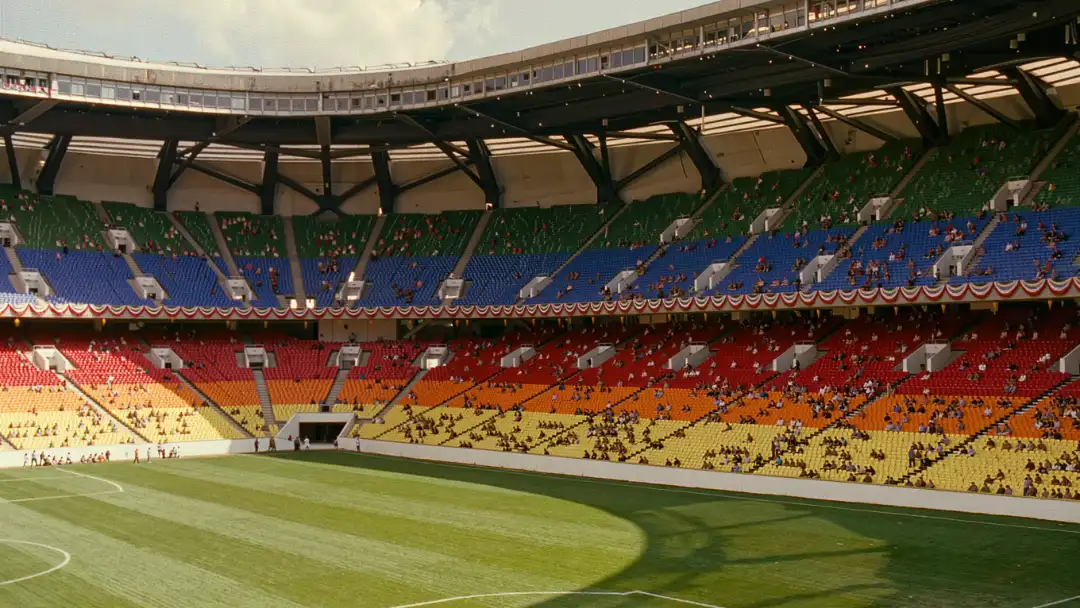
Mexico was not supposed to host in 1986 — Colombia gave up the rights in 1982 — and a catastrophic earthquake in September 1985 nearly forced another move. The football that followed belonged to one man. Maradona’s quarterfinal against England at the Azteca contained both the Hand of God and the slalom routinely voted the greatest goal ever scored, and his Argentina beat West Germany 3–2 in a final of remarkable attacking volume. The exhibits from that fortnight fill a wing of the FIFA Museum.
1994: the audience arrives
Skeptics predicted empty seats in a country without a top professional league. Instead, USA 1994 drew nearly 3.6 million spectators — an average close to 69,000 per game, both still records three decades later. The football was cagier: Brazil’s fourth title came via a 0–0 final against Italy and Roberto Baggio’s missed penalty at the Rose Bowl. The lasting legacy was structural: MLS kicked off in 1996 as a condition of the hosting bid, and the stadium infrastructure of that summer — including the New Jersey site where Bulgaria shocked Germany — maps almost exactly onto the 2026 venue list.